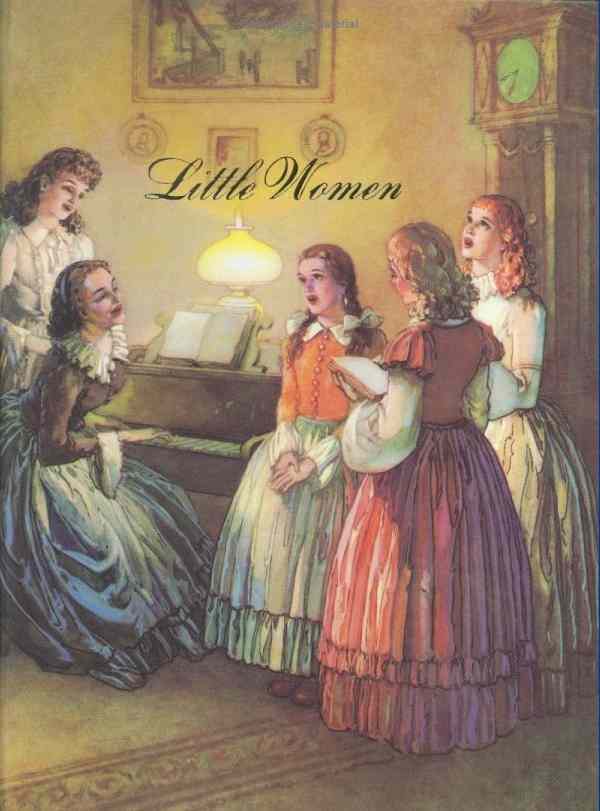
I liked
this book because even though at a couple of points I felt that it was
somewhat unrealistic I thought that it did a good job showing how
friendship can work, especially in a family setting. It was funny,
interesting, and a light read---I think I would recommend it to just
about anyone old enough to understand it.
Wednesday, May 30, 2012
Thursday, April 5, 2012
Gardeners of Eden: Rediscovering our Importance to Nature by Dan Dagget
Many books about ecological responsibility leave you thinking there's no hope - that humans and a green, happy planet are antithetical to each other, or at least that technology and (planet) health are never going to work together.This book did a remarkably convincing job of saying "it's not true." It's a slim volume, maybe half a dozen case studies, talking about how intelligent use of resources for humans can actually improve things for the other critters involved, too. Well!
I won't reiterate much of the argument here, only say that this has beautiful photos, lovely short stories, and made me feel that the idea of humans as caretakers - some would say stewards - for the earth is not such a bad one, after all.
Monday, March 12, 2012
Science Fair Season by Judy Dutton
Judy Dutton read a NYT article about a kid who was trying to train Madagascar Cockroaches in hopes of proving that they could be used as drug-sniffing-roaches instead of drug-sniffing dogs, and she was so surprised when he didn't place in the national science fair that she set out to find out why. This book-- with one chapter per project-- contains the answer to her question, which is basically that there were better projects out there. It also contains some of the most interesting science writing I've read in a very long time. My favorites are the story about the girl who taught her autistic cousin how to talk; the one aobut another girl who figured out a new and really cheap way to tell if(/that) DuPont was polluting the water in her town; and the Navajo boy who built a solar water heater for his house out of a radiator (didn't win, did get a scholarship to a much better school than the one he was at).
Saturday, March 3, 2012
Faith and Treason: The Story of the Gunpowder Plot by Antonia Fraser
I did not always love the writing in this book (or, to be more precise, the editing) but goodness if it doesn't lay down a compellingly readable story. I mean, really: a formerly-dominant-world-religion, finding itself persecuted in a land where it is now a minority, has adherents who decide that terrorism-- specifically, destroying a major government building in an eye-catching ball of fire-- is the way to let the rest of the populace know that they are really serious about their demands. Of course, if you grew up celebrating Guy Fawkes' Day, none of that may be new to you; what is new about this book is that Ms. Fraser does a creditable job of describing both the situation in general and the personalities of the persons involved in such a way that you kind of know why they did what they did. The leader of the terrorists (who was not Guy Fawkes) was both charismatic and crazy; the one priest who was executed in connection to the affair had argued the entire time against terrorism; he did so when one of the plotters confessed what they were planning to do (and thought, at the time, that he had convinced the fellow not to go through with it) and he did so again, from the scaffold, just before he was hanged. You wouldn't think this would make for cheerful reading, but it kind of does.
Wednesday, February 22, 2012
The Happiness Project: Or, Why I Spent a Year Trying to Sing in the Morning, Clean My Closets, Fight Right, Read Aristotle, and Generally Have More Fun by Gretchen Rubin
I like this book because it is funny, interesting, informative, and furthermore informative in a way which I find extremely helpful in my every day life. Really, any book that mentions "Read Aristotle" right next to "Have More Fun" was likely to get me. Gretchen Rubin spent an entire year trying out something like sixty new-year's-resolutions to see which, if any, had an effect on her happiness. The very thought of someone doing this makes me feel exhausted, and yet as I read her account of her adventures, I felt encouraged and uplifted and perhaps even a little challenged: if she could have a happiness project, surely I could. So I have-- I am-- and while I haven't taken as many of her ideas for myself as you might think, this was still a very good read, and also a very good conversation starter.
Saturday, February 18, 2012
Stalling for Time by Gary Noesner
Gary Noesner was not only the FBI's chief hostage negotiator for many years, but he was also a major player in developing their hostage negotiation progarm, period. Thus, he not only gives a lucid description of what makes for a good negotiation (stall for time, tell the truth, have firepower backing you up but not going in first)-- he also tells where this stuff comes from, mostly in the form of stories. (He doesn't never lie, by the way. It's just that he does so very, very rarely.) He also gives a believeable description of what happened-- what went wrong-- both at Ruby Ridge and at Waco. I've been waiting for that explanation for a while, mostly because these sorts of domestic problems (Waco, Columbine, OK City bombing) have happened happen right around my birthday, in April. The writing is not always what I'd pick-- it sometimes feels a bit hodge-podgey to me-- but for the information it offers (not to mention the excellent storytelling) I found it well worth the read.
Wednesday, December 14, 2011
You Don't Have to be Rich by Jean Chatzky
I could say that the title says it all-- and it very nearly does-- but I will add a couple of things that make this one of my favorite finance books.
Jean Chatzky had been a "personal finance expert" for some time when 9/11 happened, and many people-- including herself-- began to wonder about what really makes us happy, and whether money has anything to do with it at all, after 9/11 happened. Happily, she had the resources to find out: she commissioned a money-and-happiness survey, the results of which she explicates in this book.
It turns out that, though not having enough money can make you sad, money beyond a certain point doesn't make you happier. Also, there was a list of financial habits which, if you kept several of them, can make a little money seem like a lot more. (The ones I can remember off the top of my head are paying bills as they come in rather than in one bill-paying session, and being organized enough that you can find the financial documents you need within about ten minutes of looking.)
Perhaps the most refreshing thing about this book is the fact that, while she does give some potential explanations for Why These Things Are So, she doesn't focus on them. She just focuses on how to help her readers have a relationship with money that doesn't cause them pain and does, to the extent it can, bring happiness.
Jean Chatzky had been a "personal finance expert" for some time when 9/11 happened, and many people-- including herself-- began to wonder about what really makes us happy, and whether money has anything to do with it at all, after 9/11 happened. Happily, she had the resources to find out: she commissioned a money-and-happiness survey, the results of which she explicates in this book.
It turns out that, though not having enough money can make you sad, money beyond a certain point doesn't make you happier. Also, there was a list of financial habits which, if you kept several of them, can make a little money seem like a lot more. (The ones I can remember off the top of my head are paying bills as they come in rather than in one bill-paying session, and being organized enough that you can find the financial documents you need within about ten minutes of looking.)
Perhaps the most refreshing thing about this book is the fact that, while she does give some potential explanations for Why These Things Are So, she doesn't focus on them. She just focuses on how to help her readers have a relationship with money that doesn't cause them pain and does, to the extent it can, bring happiness.
Subscribe to:
Posts (Atom)


